








STAY CONNECTED

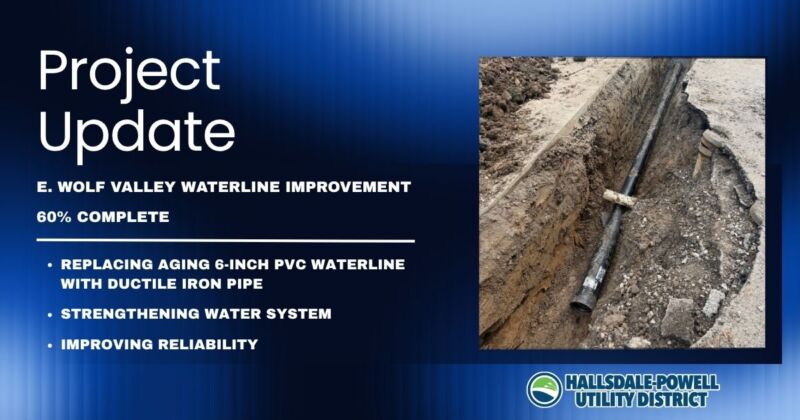
The E. Wolf Valley Waterline Improvement Project is now over 60% complete!
This $1.8 million investment will replace aging 6-inch PVC waterline with new, ductile iron pipe designed to strengthen our water system, improve reliability, and help us continue meeting the needs of our growing community for years to come.
Thank you for your patience as our contractor, Precision Construction Solutions, Inc., continues making progress on this important infrastructure improvement. #HPUDBillAtWork #CommittedToExcellence

0 CommentsComment on Facebook


The E. Wolf Valley Waterline Improvement Project is now over 60% complete!
This $1.8 million investment will replace aging 6-inch PVC waterline with new, ductile iron pipe designed to strengthen our water system, improve reliability, and help us continue meeting the needs of our
Youtube


Source Water Protection Week
The E. Wolf Valley Waterline Improvement Project is now over 60% complete!
This $1.8 million investment will replace aging 6-inch PVC waterline with new, ductile iron pipe designed to strengthen our water system, improve reliability, and help us continue meeting the needs of our growing community for years to come.
Thank you for your patience as our contractor, Precision Construction Solutions, Inc., continues making progress on this important infrastructure improvement. #HPUDBillAtWork #CommittedToExcellence


Today, our team is wearing pink to show our support for breast cancer awareness and honor the strength of those who have been diagnosed, those currently fighting, survivors, and the loved ones who stand beside them. Breast cancer awareness reminds us of the importance of early detection, regular screenings, and supporting one another through every step of the journey.

Imagine a day without water.
No water for your morning coffee, shower, or brushing your teeth. No water to prepare meals, wash clothes, or flush the toilet. Hospitals, schools, businesses, and firefighters would all feel the impact.
Water connects every part of our day—and reliable service takes ongoing care. At HPUD, our employees work every day to treat water, maintain pipes and equipment, and safely manage wastewater to protect our community.
Imagine a Day Without Water reminds us to appreciate this essential resource and the people and infrastructure that keep it flowing. #ImagineADayWithoutWater #HPUDBillAtWork #CommittedToExcellence

Give Your Sprinklers a Seasonal Break!
As temperatures cool and fall brings more frequent rainfall, it’s time to turn off your automatic irrigation system and give your lawn a break from supplemental watering.
Cooler weather and seasonal rain often provide the moisture your landscape needs. Reducing unnecessary watering helps conserve our community’s water resources and can even help lower your water bill!
A few simple steps can make a difference:
• Turn off automatic sprinkler schedules.
• Adjust watering based on rainfall and weather conditions.
• Check your irrigation system for leaks before putting it away for the season.


ActNow
Alliance for a Cleaner Tomorrow, ACT Now, is our ten-year program to improve the condition of the wastewater collection system assets and ultimately improve water quality.

Water for Tomorrow
Raising awareness about our water and the critical infrastructure that brings it to and from our homes and businesses every day.